Skip to contentCPAP and BiPAP
Continuous positive airway pressure CPAP and Bi-level Positive Airway Pressure devices BiPAP.
What is CPAP and BiPAP?
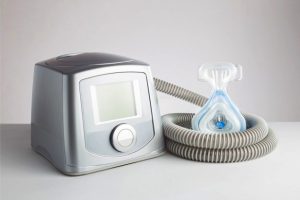
CPAP and BiPAP are medical devices used in care for respiratory compromised patients. Continuous positive airway pressure or CPAP for short are medical devices that apply mild air pressure on a continuous basis, or a mixture of air and oxygen (O2) through a mask or nasal tubing to a person or patients’ airway. The units are airflow generators and the pressure acts as a pneumatic support to prevent closure of the airway. CPAP devices keep the airways continuously open in people who are able to breathe spontaneously on their own, but need help in keeping their airway unobstructed.
CPAP units are commonly used to provide breathing assistance to patients with obstructive sleep apnea or sleep apnea/hypopnea syndrome. Obstructive sleep apnea refers to the periodic ceasing or reduction of breathing during sleep, due to narrowing of the upper airways. It is characterized by excessive snoring and periodic breathing, with repetitive ceasing or reduction of breathing that leads to the person waking up and the sleep being very disturbed and fragmented. Snoring, age and high negative inspiratory pressure during sleep may cause the soft palate to lose muscle tone. This muscle tone loss causes the upper airway to narrow, creating greater airflow resistance and can cause a complete closure of the airway. The primary symptom is daytime fatigue, sleepiness and symptoms related to an incomplete sleep pattern.
CPAP units are gaining more and more traction as a preventive and support device for patients with conditions such as cystic fibrosis, chronic lung disease, and other condition such as acute asthma.
CPAP units deliver pressure continuously at a previously set level throughout the period of use normally during the sleep process. Bilevel Positive Airway Pressure devices (BiPAP) units deliver two independently adjusted levels of pressure one for inhalation and one for exhalation. Some CPAP/BiPAP machines have other features as well, such as heated humidifiers. Optimal pressure levels for CPAP and BiPAP are normally determined in a sleep laboratory or by a physician and set before the unit is used by the patient.
Operation principles
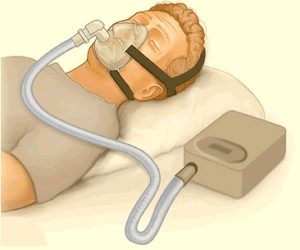
CPAP/BiPAP devices consist of a flow generator or “air blower,” a length of flexible tubing, and a tight-fitting mask. Masks come in varieties, ones that cover the entire nose, and ones that cover both the nose and mouth. Most masks are held in place by elastic straps that go around the persons/patient’s head. Most available CPAP/BiPAP face masks are and available in various sizes and contours. They are made of a vacuum formed hard plastic outer shell with a soft inner-flap seal of vinyl or silicone. The pressure settings on the units can typically range from between 3 to 20 cm H2O, to prevent the collapse of the walls of the upper airway. With BiPAP, controls are used to set inspiratory time and pressure, expiratory time and pressure and trigger sensitivity.
Power is supplied from either an electrical wall outlet and many units have an internal battery included with automatic switchover functions. Most devices have some form of audible alarm function ranging from patient/person status changes, equipment malfunctions and mask sealing problems. Other alarms such as no breath detection, or change in breath length re inspiration and expiration may also be included.
Reported side effects.
CPAP/BiPAP is generally considered a safe therapy, and no serious adverse problems with long-term use have been noted. Side effects such as dry mouth, difficulty staying asleep, dry throat, abdominal wind pain, leaking masks and breathing difficulty have been noted. The dry mouth and throat have been noted with full face masks and the side effect is similar to experienced normal breathing through your mouth dryness when sleeping.
Air leaks are typically fixed by changing the mask size and adjusting it properly. Changing the mask type and adding a humidifier may help to alleviate some of the mentioned side effects.
Finding the appropriate pressure level(s) for each patient is important to prevent adverse conditions and these should be professionally addressed by a physician or a sleep lab for the best results.
CPAP/BiPAP and Coronavirus (Covid-19)
In all aspects, when dealing with coronavirus (Covid 19) always seek professional medical advice, with respect to the disease and any devices or protocols of treatment, or if under any doubts, or if you have any concerns and questions.
With a predicted shortfall of hospital ventilators needed to treat people diagnosed with COVID-19 disease with breathing problems, many health departments and authorities have authorized the use of CPAP and similar devices to help cover the forecasted shortage. This would be in the case of shortage and for patients not requiring full ventilation but still experiencing breathing difficulty as prescribed by a medical professional.
Coronavirus spread by CPAP and BiPAP
Droplet spread can be increased by using positive airway pressure devices such as CPAP. The air pressure from CPAP increases droplet production and spread from the mouth and nose through the process of aerosolization of secretions. These aerosolized virus particles may remain suspended in the air for an hour or more. Contaminated CPAP masks and tubing can also aid disease transmission through direct contact. Without cleaning, Coronavirus COVID-19 can persist on plastic and other surfaces for many hours.
People with known or suspected Coronavirus COVID-19 must ensure that they are as isolated as possible from others, including while using CPAP. They should sleep in a separate room if possible, with doors closed. If a separate room is not available, you should seek advice from your doctor about alternate treatments for your obstructive sleep apnea while infectious. There are changes that can be made to CPAP equipment to decrease the risk to others, including use of a different face mask and viral filters. Any modification to your treatment must only be done under the direction of a skilled provider and in line with the manufacturer recommendations, to ensure the CPAP therapy continues to be delivered safely to you. In the case of children any change should only be done under the strict direction of your child’s sleep doctor.
General cleaning re infectious diseases (Always refer to manufacturer recommendations and professional medical advice)
CPAP equipment should be cleaned after every use and the bedroom environment kept clean, with regular disinfecting of surfaces, including careful attention to the casing of the CPAP device. Observe recommended cleaning protocols regarding Coronavirus from manufactures and infection experts. The mask and tubing from your CPAP equipment require special attention. Basic steps include:
Disconnecting these from the CPAP machine.
Disassembling your mask into its key individual components.
Cleaning these mask parts and your tubing in mild soap and warm water or manufactures recommended cleaning solutions.
Rinsing them in warm water.
Placing them on a towel on a flat surface out of direct sunlight to dry.
End